How much does radon mitigation cost in Pennsylvania?
Most single-family sub-slab depressurization systems fall in a fairly narrow band, with the variation driven by the building rather than the contractor. What moves the price: how many suction points the slab needs, whether the foundation is a basement, a slab, a crawlspace or a combination, how far the pipe has to run to discharge above the roofline, whether the route can be run outside or has to go through conditioned space, and how much sealing of cracks, sump pits and penetrations is required. Ask for the quote to itemise the number of suction points, the fan model and its warranty, the pipe routing, the sealing work, the post-mitigation test and any electrical work. Two quotes that differ by a wide margin usually differ in those items, not in profit.
Will insurance pay for radon mitigation?
Generally no. Homeowner's insurance covers sudden and accidental damage, and radon is a naturally occurring soil gas rather than an event — so mitigation is normally treated as a property improvement and paid for by the owner. There are two places the cost commonly moves off you anyway. In a real estate transaction, mitigation is frequently negotiated as a seller concession after a test result. And some Pennsylvania counties and programmes have at times offered assistance or reduced-cost testing, so it is worth asking DEP's Radon Division what is currently available before assuming there is nothing.
What time of year is worse for radon?
Winter, usually, and the reason is mechanical rather than geological. When a house is closed up and heated, warm air rising inside creates a slight negative pressure at the lowest level, which draws soil gas in through the foundation more strongly than in mild weather when windows are open. This is why the EPA recommends closed-house conditions for short-term testing — you want to measure the building near its worst realistic case rather than its best. A summer test taken with windows open can substantially understate the level you actually live with in January.
What is the average radon level in a home in Pennsylvania?
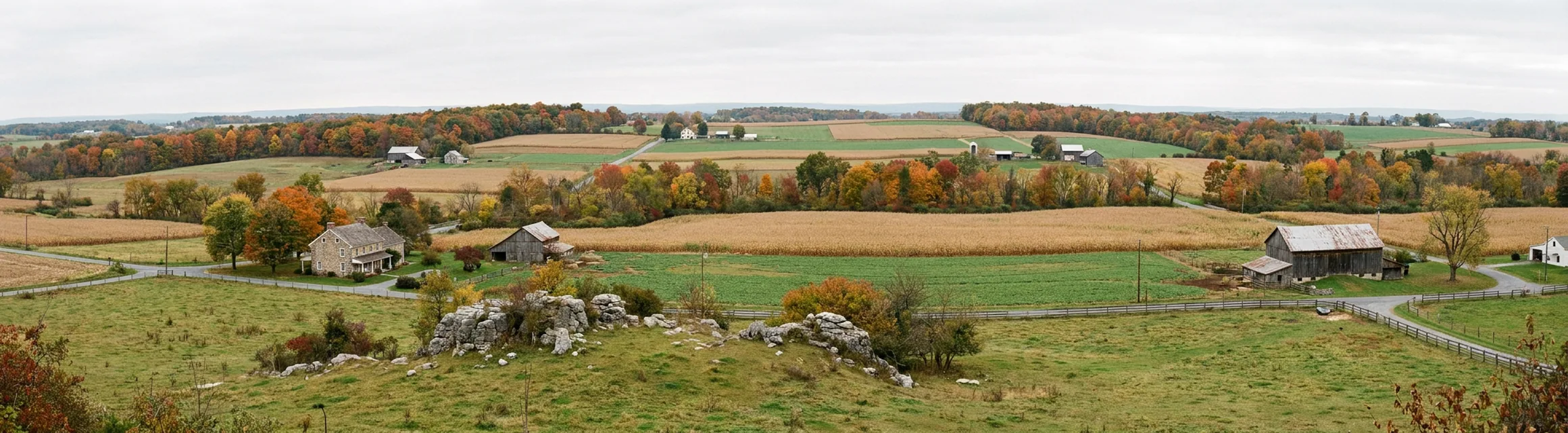
There is no single useful average, and that is the important part of the answer. The Pennsylvania Department of Environmental Protection estimates that 40 percent of homes tested in the Commonwealth exceed the EPA action guideline of 4 picocuries per litre, and describes Pennsylvania as having one of the most serious radon problems in the country. But readings vary sharply between neighbouring properties, because the result depends on the soil and rock under that specific building and on how that foundation is built. An average cannot tell you whether to mitigate. Only a test of your own property can.
How does a radon mitigation system actually work?
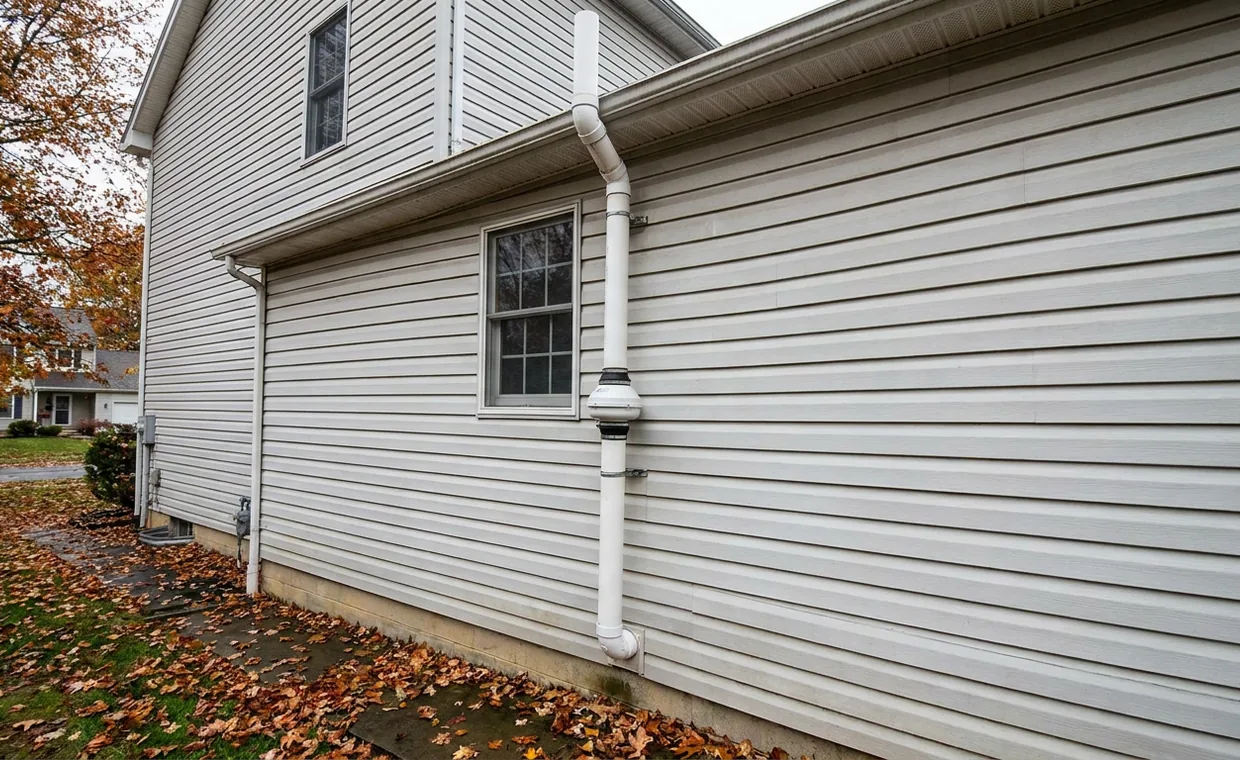
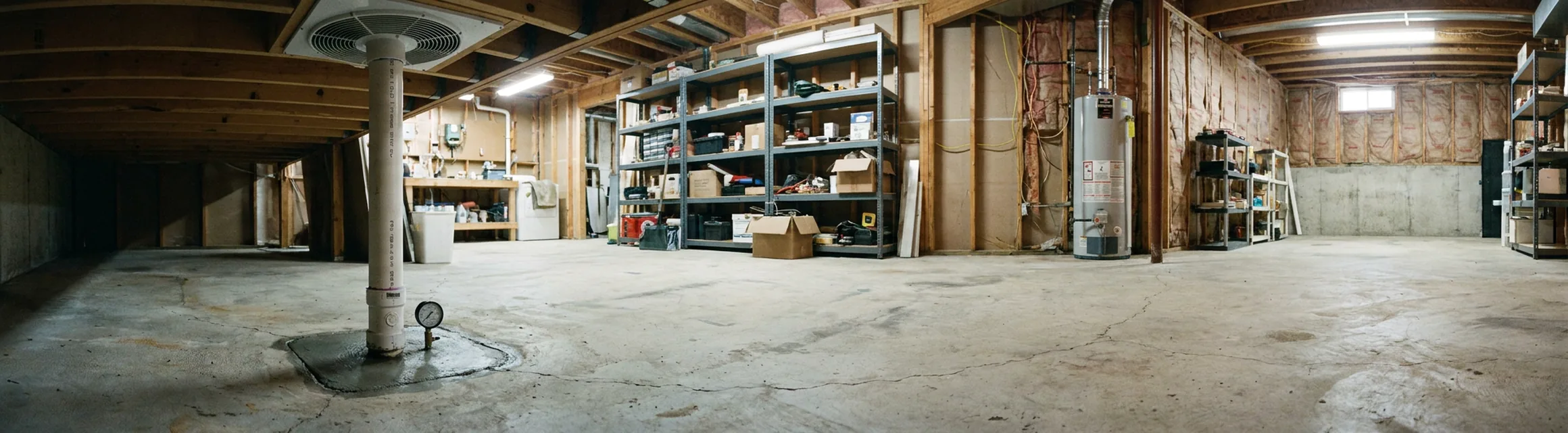
The standard approach is called sub-slab depressurization. A suction point is cut through the basement or slab floor, a pipe is sealed into it, and an inline fan draws soil gas from beneath the slab and discharges it above the roofline where it disperses. The fan creates a lower pressure under the slab than inside the house, so soil gas follows the pipe instead of entering through cracks and openings. Cracks, sump pits and penetrations are sealed to make that pressure field work efficiently. It is a simple system, it runs continuously, and the fan uses roughly as much electricity as a light bulb.
Does Pennsylvania require radon contractors to be certified?
Yes. The Pennsylvania Department of Environmental Protection administers a certification programme covering radon testing, radon mitigation and radon laboratory analysis, for both individuals and firms, under the Commonwealth's Radon Certification Act. DEP's Radon Division publishes lists of certified individuals and firms. Before you hire anyone for testing or mitigation in Pennsylvania, check them against that list and confirm their certification is current — this is the single most useful thing on this page.